Martial Arts for Hyperactive Kids: The Gracie Barra Agoura Jiu Jitsu Approach
For parents of children with ADHD (Attention Deficit Hyperactivity Disorder) or simply high levels of energy, finding an extracurricular activity can be a nightmare. Team sports often require too much “standing around,” and traditional classrooms can feel like cages.
Gracie Barra Agoura Hills offers a unique solution. Located at 5883 Kanan Rd, the academy’s Brazilian Jiu-Jitsu (BJJ) program is arguably the most effective athletic outlet for hyperactive children. Unlike activities that try to suppress a child’s energy, the Future Champions Program channels it.
Here is a detailed breakdown of the Gracie Barra Agoura Hills approach to martial arts for hyperactive kids.
- The Core Philosophy: Channeling vs. Suppressing
The traditional approach to a hyperactive child is often “Sit down and be quiet.” This fights against the child’s nature.
The GBAH Approach: Professor Jaeson Bianchi and his team operate on the premise that high energy is a superpower if directed correctly.
The Outlet: Instead of asking a child to sit still, BJJ asks them to use every ounce of their energy to shrimp, bridge, crawl, and wrestle. By the time the “learning” portion of the class arrives, the child has burned off the “fidgety” energy and is physically ready to focus.
- “Deep Pressure” and Sensory Regulation
Many hyperactive children seek sensory input (crashing into things, roughhousing). BJJ provides this in a therapeutic way.
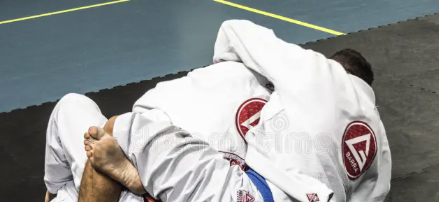
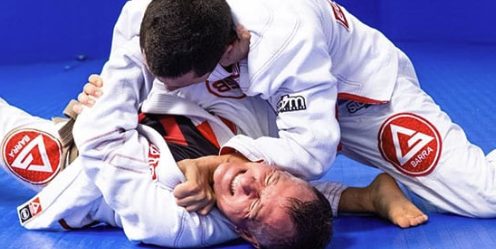
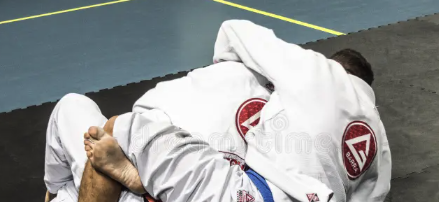
Proprioception: BJJ involves constant physical contact—pushing, pulling, and being held down. This “Deep Pressure Stimulation” (similar to a weighted blanket) has a calming effect on the nervous system.
Grounding: Being compressed under a partner in a safe, controlled drill forces the child to be aware of their body boundaries. Parents often report that their child is significantly calmer and more regulated for hours after class.
- The “Immediate Feedback” Loop
Hyperactive minds often drift when consequences are delayed (like getting a grade on a test next week). BJJ captures their attention because the consequences are instant.
The Consequence of Distraction: If a child zones out during a baseball game, they might miss a ball once an hour. If a child zones out during BJJ sparring, they get swept or pinned immediately.
Forced Focus: This immediate cause-and-effect loop forces the child to stay in the “Now.” They must pay attention to survive the game. It creates a state of Hyper-Focus that trains the brain to sustain attention longer over time.
- Structure and Routine (The Container)
While the movement is wild, the environment is rigid. This provides the structure hyperactive kids crave but often lack.
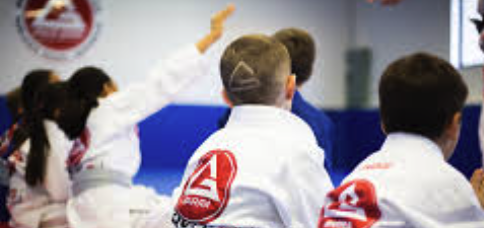
The Rituals: The class follows the exact same pattern every day: Line Up $rightarrow$ Bow $rightarrow$ Warm-Up $rightarrow$ Technique $rightarrow$ Rolling.
Clear Expectations: There is no ambiguity. The rules are simple: “When the Professor speaks, we freeze.” Because the rules are enforced consistently (and kindly), children feel safe and learn to self-regulate.
- Micro-Goals for Short Attention Spans
A long-term goal like “Win the season championship” is too abstract for a hyperactive child. BJJ breaks success down into seconds.
The 10-Second Goal: During a match, the goal isn’t “get a black belt.” It’s “Escape this hold right now.” Or “Don’t let him pass my guard.”
Constant Dopamine: Achieving these tiny, rapid-fire goals provides the dopamine hits that ADHD brains seek, keeping them engaged and motivated throughout the hour.
- Athletic Exhaustion (The “Tired Dog” Theory)
It is a simple biological fact: A tired child is a well-behaved child.
Anaerobic Intensity: BJJ is not just jogging; it is full-body wrestling. It engages the core, legs, arms, and lungs simultaneously.
Sleep Hygiene: Parents of hyperactive kids often struggle with bedtime battles. After a 60-minute session at Gracie Barra Agoura Hills, the child is physically depleted in a healthy way, leading to faster sleep onset and better rest.
- Social Acceptance (The “Island of Misfit Toys”)
Hyperactive kids are often scolded in school or excluded from playdates for being “too rough.”
A Place to be Rough: At the dojo, roughhousing is not just allowed; it is encouraged (within the rules).
Positive Identity: The child stops seeing themselves as “the bad kid who can’t sit still” and starts seeing themselves as “the strong kid who is good at grappling.” This shift in self-identity is transformative.
- The Instructor’s Patience
The team at GBAH is experienced with neurodiverse children.
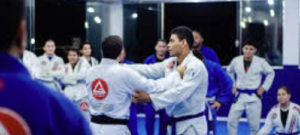
redirection: If a child is spinning in circles while the instructor is talking, they aren’t shamed. An instructor might simply place a hand on their shoulder or say, “Stand like a Black Belt,” gently bringing them back to the group without making a scene.
For the hyperactive child, Gracie Barra Agoura Hills is not just a gym—it is a sanctuary where their energy is validated and their focus is sharpened. It turns their greatest challenge (excess energy) into their greatest asset (athleticism).
Hours
Mon-Thurs: 12 PM to 9 PM
Fridays: 12 PM to 7 PM
Saturdays: 9 AM to 2 PM
Sundays: CLOSED
Contact
Phone Number: +1 805-800-9681
info@gbnorthridge.com
Location
19520 Nordhoff St Unit 10 Northridge, CA 91324
Martial Arts for Hyperactive Kids: The Gracie Barra Agoura Jiu Jitsu Approach

Route
Gracie Barra Agoura Learn Brazilian Jiu Jitsu
Secondary phone: +1 805-800-9681
Email: info@gbagoura.com
URL: https://gbagoura.com/
| Monday | 12:00 PM - 8:00 PM |
| Tuesday | 12:00 PM - 8:00 PM |
| Wednesday | 12:00 PM - 8:00 PM |
| Thursday | 12:00 PM - 8:00 PM |
| Friday | 12:00 PM - 1:00 PM |
| Saturday | 10:00 AM - 12:30 PM |
| Sunday | Closed |