The Invisible Pressure Cooker of Elementary and Middle School
Look at any playground in Agoura Hills right around recess time and you will see groups of children running around, but beneath all that bright California sunshine, the social dynamics can turn harsh fast. Bullying today does not always announce itself with movie style fistfights or loud shouting matches in the schoolyard. It starts with small, nasty jabs by the lockers, a bigger kid bumping into someone in the cafeteria line to test their reaction, or a group whispering insults just loud enough to cut deep while adults stand thirty feet away completely unaware.
Parents often notice the quiet shifts before anything physical ever happens. A chatty kid suddenly goes silent on the drive home from school, starts picking at their dinner, or claims they feel too sick to go to class on Monday morning. Giving them the usual advice to just ignore the bullies or tell the yard duty supervisor rarely works in real life, because bullies prey specifically on visible hesitation. When a child feels completely defenseless in their own skin, that terror leaks out of their eyes and shoulders, marking them as an easy target for anyone looking to push their weight around.
Why Learning to Throw Strikes Backfires on Kids
When parents get worried, the gut reaction is often to find a martial arts studio that teaches boxing or karate, thinking that if their child learns how to throw a hard punch, the problem will take care of itself. In reality, teaching a frightened child to strike is one of the worst mistakes you can make. Bare knuckle punches thrown in panic often end up breaking tiny finger bones, splitting lips, and turning a simple boundary dispute into a bloody, dangerous mess that invites serious retaliation from older kids.
On top of the physical danger, modern schools operate under rigid zero tolerance policies that treat both kids the exact same way if fists start flying. The principal is not going to spend hours untangling who said what first; they will just suspend your child along with the bully who provoked them. Brazilian jiu jitsu solves that dilemma by taking violence out of the equation and replacing it with total physical control. A student learns how to close the space safely, wrap up the aggressive kid, and defuse the situation without inflicting concussions, broken teeth, or bloody noses on anyone.
Commanding Personal Space Through Natural Posture and Base
Most confrontations are settled before hands are ever laid on clothing, decided entirely by posture and presence. An aggressive child searches for easy prey, instinctively watching for slumped shoulders, downcast eyes, and a fearful backward shuffle. When a timid kid pulls their arms in tight and shrinks away, it signals to a bully that they can take another step forward without facing any resistance.
On our mats at Gracie Barra in Agoura Hills, the very first skill we drill into kids is how to occupy their physical space with conviction. We teach them to plant their feet slightly wider than their shoulders, bend their knees for balance, and look directly into the other person’s eyes without flinching. When our students speak, they keep their hands up in an open, conversational gesture that sets a clear boundary while being fully prepared to block an incoming grab. That grounded stance alone convinces most troublemakers to look for an easier target elsewhere.
Taking the Chaos Safely Down to the Mat
If an aggressive peer refuses to back off and charges in anyway, remaining upright on hard asphalt carries massive risks. A sudden shove can send a child falling backward into concrete benches or curbs, resulting in severe head trauma. The smartest defensive strategy is guiding the entire situation down to the ground under deliberate control, where unpredictable momentum completely vanishes.
Our youth classes spend hundreds of hours practicing body locks, level changes, and gentle trips that redirect an attacker’s forward aggression. A student learns how to duck under wild swings, wrap their arms around the waist, and bring both bodies down safely to the surface without slamming or hurting either person. By controlling the descent, your child lands in a dominant posture while the aggressor absorbs the shock of losing their footing, instantly losing the leverage needed to throw wild haymakers.
Conquering the Nightmare of Being Pinned Flat
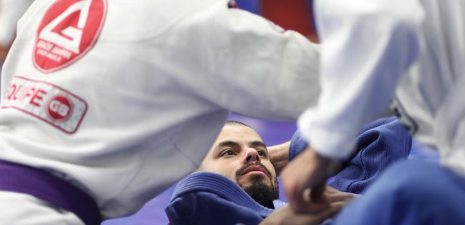
Ask any untrained child what terrifies them most about a physical altercation, and they will tell you it is the horrifying feeling of being knocked down and held flat on their back. That trapped sensation triggers a wave of primal panic that causes kids to hyperventilate, thrash their arms wildly, and burn through every drop of stamina in fifteen frantic seconds. Once a child exhausts their energy in blind panic, they are entirely at the mercy of whoever is sitting on them.
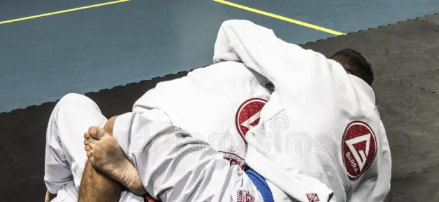
Our students conquer that specific dread through steady, patient exposure until being underneath someone heavier feels no more threatening than working through a physical puzzle. We teach kids to tuck their chins, build strong frames with their forearms to protect their neck and face, and use hip escapes to create pockets of breathing room. When a young student realizes they can methodically slide their hips out and stand back up to safety, the bully’s primary weapon of terror completely dissolves.
The Safety Fortress of the Closed Guard
There is no concept in martial arts more empowering for a smaller person than the Brazilian jiu jitsu guard. In almost every other fighting system, being flat on your back against an opponent means you have already lost. In jiu jitsu, wrapping your legs around an opponent’s hips from the bottom instantly turns a vulnerable position into a formidable defensive fortress.
A seventy pound student can comfortably neutralize an eighty-five pound bully by breaking down their posture, controlling their wrists, and keeping their head buried safely against the chest. From inside the closed guard, the person on top cannot generate the distance or leverage needed to deliver an effective blow. A young practitioner can safely hold an aggressive peer in this controlled knot indefinitely, speaking calmly and waiting for a playground supervisor to arrive, all without taking a single scratch to the face.
Reversing the Tables and Dominating the Mount
While defending from the guard keeps a child safe, staying on the ground beneath an aggressive peer during recess is rarely a permanent solution. The ultimate goal is reversing the position entirely, putting your child on top where they control the pace, visibility, and physical outcome of the confrontation. That smooth technical reversal is known as a sweep.
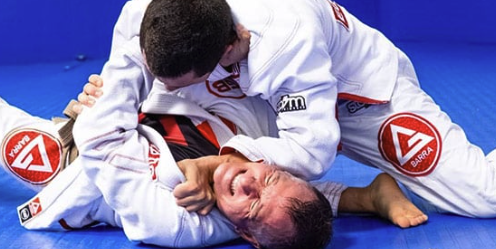
Our students spend countless hours practicing the scissor sweep and the pendulum sweep, techniques that rely strictly on timing and fulcrums rather than upper body muscle. By using a shin across the waist and tilting the opponent’s center of balance, a smaller child flips a larger partner cleanly onto their back, sliding directly into the mount position. Sitting securely across the hips with knees spread wide, your child controls the encounter completely while looking down and telling the aggressor that the fight is over.
Taking the Back and Eliminating All Retaliation
If an aggressive child finds themselves pinned under a solid mount, their natural panic reflex is almost always to roll over onto their stomach and try to crawl away or push off the floor. When that happens, our students transition seamlessly to taking the back, wrapping their legs around the hips as hooks and locking in a seatbelt grip across the shoulders.
Controlling someone from behind is the absolute pinnacle of self defense safety because the opponent cannot strike backward with any meaningful force. Our students learn to stay glued to the other person’s spine, calmly riding out any wild thrashing until the attacker runs out of steam and realizes they have zero leverage. By controlling the situation from a complete blind spot, your child removes every possibility of being hurt while maintaining complete physical authority.
The Integrity of Real and Honest Resistance
A troubling flaw in modern youth activities is the widespread habit of handing out cheap participation trophies and unearned belts just to keep enrollment numbers high. Children possess keen instincts, and they know in their bones when praise has not been earned through genuine effort. Memorizing patterns and punching through thin wooden boards held by an instructor creates a fragile illusion of competence that shatters the second a real person pushes back.
At our academy, confidence is forged through authentic, live resistance during every single practice session. Our students spend the final portion of class sparring with partners who are actively trying to defend, sweep, and escape using their own technical knowledge. When a nine year old girl successfully applies an escape against a resisting teammate, she knows her capability is real. That hard won reality gives children an unshakeable armor that playground intimidation cannot pierce.
Forging Resilient Character for the Road Ahead
Learning to neutralize physical conflict is an essential survival skill, but the true transformation that occurs on our mats runs far deeper than self defense techniques. When a child learns how to regulate their breathing, stay analytical under pressure, and work through uncomfortable physical situations several days a week, their capacity to handle everyday life expands dramatically.
A young person who knows how to keep their head while someone tries to hold them down will not crumble when a peer calls them a cruel name in the lunch line or when a test gets difficult. They develop a patient, understated strength that makes them naturally kind to others and quick to stand up for peers who cannot defend themselves. That quiet inner peace stays with them long after they take off their uniform, shaping them into grounded, confident leaders for the rest of their lives.
Gracie Barra Jiu-Jitsu Agoura Hills, California | 5883 Kanan Rd Suite 16 & 17, Agoura Hills, CA 91301 United States 📞 (805) 800 9681
Gracie Barra Agoura (often referred to as Gracie Barra Agoura Hills) is a premier Brazilian Jiu-Jitsu (BJJ) academy located in the heart of the Conejo Valley. It is part of the global Gracie Barra network—the largest BJJ organization in the world—and is distinguished by its direct leadership under BJJ Hall of Fame icons.
Here is a detailed breakdown of everything you need to know about the academy, its programs, and its philosophy.
- Gracie Barra Agoura Jiu Jitsu Location and Facility
The academy is situated in a central hub accessible to residents of Agoura Hills, Oak Park, Westlake Village, and Calabasas.
Address: 5883 Kanan Rd, Suites 16 & 17, Agoura Hills, CA 91301.
Facility Standards: The gym is a “Premium Performance Center.” It features high-quality mats that are industrially sanitized daily (hospital-grade hygiene), modern changing rooms, and a spectator area for parents.
Atmosphere: Unlike “fight clubs,” the environment is professional, well-lit, and family-oriented. The “Red Shield” etiquette requires clean uniforms and respectful behavior, creating a safe space for professionals and children alike.
- World-Class Leadership
The primary differentiator for Gracie Barra Agoura is the caliber of its instruction. You are not just learning from a local coach; you are learning from legends of the sport.
Professor Romulo Barral: A 10-time World Champion and member of the IBJJF Hall of Fame. He is one of the most decorated athletes in the history of the sport.
Professor Jaeson Bianchi: A 2nd-degree Black Belt who has led youth programs since 2011. He specializes in child development and creates the curriculum for the “Future Champions” program.
Professor Zane Spruce & Professor Caio Vinicius: Both are high-level Black Belts known for their technical clarity and ability to translate complex “world champion” moves into digestible steps for beginners.
- Adult Programs (“Jiu-Jitsu for Everyone”)
The adult curriculum is structured like a university course, ensuring you learn in a logical progression rather than random moves.
GB1 Fundamentals: The entry point for beginners. This follows a 16-week rotating curriculum covering the core 96 techniques of BJJ. There is no live sparring in the early stages; the focus is on cooperative drilling and self-defense (escaping headlocks, bear hugs, etc.).
GB2 Advanced: For students who have earned at least 3 stripes on their white belt. This program introduces live rolling (sparring), complex guard systems, and advanced submission chains.
GB3 Black Belt Program: Focuses on the “flow” of Jiu-Jitsu, high-level strategy, and bridging the gap between blue belt and black belt.
“All Levels” & No-Gi: The academy offers classes where all ranks train together, as well as “No-Gi” submission grappling (training in shorts and a rash guard rather than the traditional kimono).
- Kids Program (“Future Champions”)
The youth program is divided by age to ensure developmental appropriateness. The goal is to build “internal armor” against bullying while channeling high energy into focus.
Little Champions (Ages 4–6): Focuses on motor skills, coordination, and “animal movements” (shrimping, crawling) to build body awareness.
Juniors (Ages 7–9): Introduces the concept of “non-violent self-defense.” Children learn to control a bully on the ground without punching or kicking, protecting them from both physical harm and school suspension.
Teens (Ages 10–15): A critical program for adolescents. It combines high-level BJJ technique with mentorship, helping teens navigate social pressure, build confidence, and prepare for adulthood.
ADHD High Energy Focus: The academy is well-regarded for its work with hyperactive children. Instead of suppressing energy (“sit still!”), instructors channel it into “heavy work” (grappling), which often results in better focus at school and home.
- The “Red Shield” Culture & Philosophy
Gracie Barra Agoura operates on a set of core values that extends beyond the mats.
Brotherhood Sisterhood: The academy fosters a non-ego environment. Higher belts (“Big Brothers/Sisters”) are expected to help and protect lower belts, not dominate them.
Safety First: The “Tap” (signaling submission) is taught as a tool for learning, not losing. Injuries are minimized through strict supervision and a culture that prioritizes longevity over intensity.
Self-Defense First: While sport BJJ is taught, the foundation is always self-protection. You learn to manage distance, de-escalate verbal conflict, and neutralize aggression safely.
- Schedule and Membership https://gbagoura.com/schedule/
Operating Hours:
Mon–Thu: 12:00 PM – 8:00 PM
Fri: 12:00 PM – 1:00 PM
Sat: 10:00 AM – 12:30 PM
Sun: Closed
Membership: Gracie Barra typically uses a flat monthly rate that allows access to specific program tiers. The academy offers a Free Introductory Class so you can try the mats, meet the professors, and see the facility before committing.
Next Step for You
If you live in the Agoura Hills area and are considering starting, the best first step is to experience the culture firsthand without obligation.
Would you like me to find the link to book your Free Introductory Class at Gracie Barra Agoura, or would you like to see the specific class times for a particular age group?
Contact
Phone Number: +1 805-800-9681
info@gbnorthridge.com
Gracie Barra Agoura Jiu Jitsu Location
5883 Kanan Rd Suite 16 & 17, Agoura Hills, CA 91301
Anti Bullying Martial Arts for School Age Kids | Gracie Barra Agoura Learn Brazilian Jiu Jitsu
Route
Gracie Barra Jiu Jitsu Agoura Hills Learn Brazilian
Secondary phone: +1 805-800-9681
Email: info@gbagoura.com
URL: https://gbagoura.com/
| Monday | 12:00 PM - 8:00 PM |
| Tuesday | 12:00 PM - 8:00 PM |
| Wednesday | 12:00 PM - 8:00 PM |
| Thursday | 12:00 PM - 8:00 PM |
| Friday | 12:00 PM - 1:00 PM |
| Saturday | 10:00 AM - 12:30 PM |
| Sunday | Closed |