Focus and Discipline: How BJJ Helps Gracie Barra Agoura Jiu Jitsu Kids in School
At Gracie Barra Agoura Hills, parents often discover a surprising “side effect” of martial arts training: Better grades and better behavior at school.
While the primary goal of the Future Champions Program at 5883 Kanan Rd is to teach Brazilian Jiu-Jitsu (BJJ), the hidden curriculum is laser-focused on Executive Functioning—the brain skills that control focus, impulse control, and discipline.
Here is a detailed breakdown of how the training on the mats translates directly to success in the classroom.
- The Science of Focus: “Executive Attention”
In a classroom, a child must tune out distractions (a buzzing fly, a classmate whispering) to listen to the teacher. BJJ strengthens this muscle through “Active Drilling.”
The Problem: Modern entertainment (social media, video games) often trains brains for short attention spans and rapid dopamine hits.
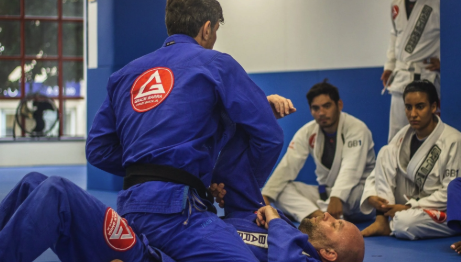
The BJJ Fix: To learn a move like an “Armbar,” a child must watch a complex, multi-step demonstration for 2–3 minutes without fidgeting. Then, they must replicate it.
The “If-Then” Loop: “If I put my hand here, he escapes. If I put it there, he stays trapped.” This requires sustained mental engagement. If they lose focus for one second, the move fails. This immediate feedback loop trains the brain to stay locked in.
- Impulse Control (The “Stop and Think” Skill)
Impulse control is the ability to not blurt out an answer or hit a classmate who took a pencil. BJJ is arguably the best sport in the world for teaching this.
Controlled Aggression: During “rolling” (sparring), a child is fighting to win, but they must follow strict rules. They cannot bite, scratch, or strike. They must control their adrenaline.
The “Tap” Discipline: When a partner taps, they must stop instantly. Even if they are excited, even if they are winning, they must freeze. This wires the brain to override emotional impulses with disciplined action—a skill that prevents trips to the Principal’s office.
- The “Student Mindset”: Respect for Authority
Gracie Barra Agoura Hills reinstates traditional etiquette that is often fading in schools.
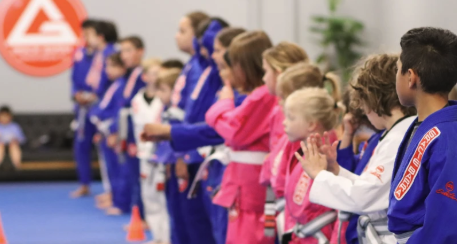
The Bow: Every class begins and ends with a bow to the Professor. This is a physical anchor that says, “I respect my teacher.”
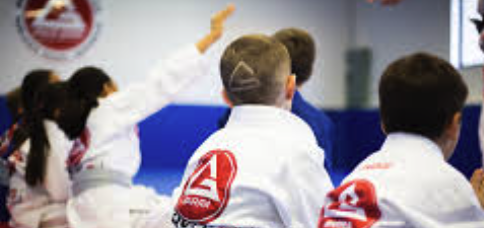
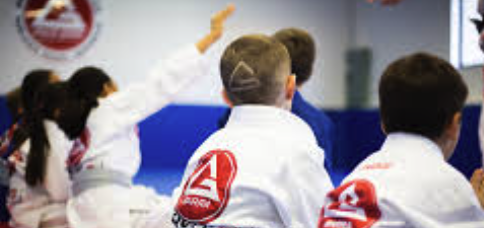
Posture and Listening: Students are taught “Black Belt Posture”—standing still, hands at sides or on belt, eyes on the speaker. They are not allowed to interrupt. This habit transfers to school; teachers often report that BJJ students are the ones making eye contact and listening while others are distracted.
- Stress Management (Test Anxiety)
Many children struggle with anxiety during exams. BJJ is a simulator for stress.
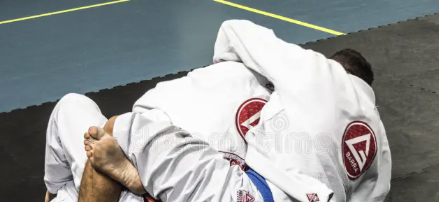
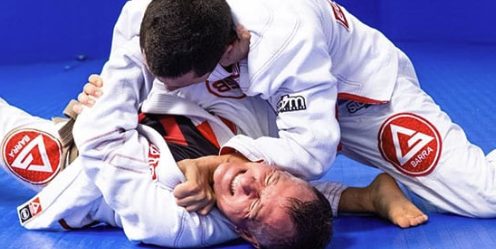
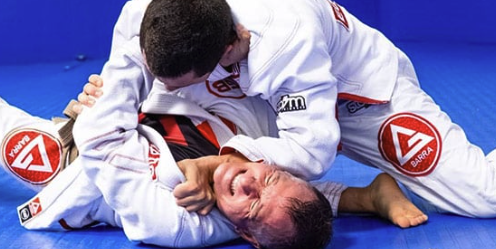
The “Smother” Effect: Being pinned under a heavier partner is uncomfortable and claustrophobic. It mimics the physiological feeling of panic.
Breathing Through It: The Professors teach students to breathe through their nose and relax their bodies to escape the pin.
The Transfer: When a child stares at a hard math problem and feels that same panic rising, their BJJ training kicks in. They take a deep breath, calm their heart rate, and look for the solution logically rather than emotionally.
- Goal Setting: The Stripe System
School can feel like a never-ending grind with no rewards until the end of the year. BJJ breaks success down into manageable chunks.
Visual Progress: The Belt and Stripe system provides constant visual feedback. A child sees that Attendance + Effort = Stripes.
The Growth Mindset: They learn that they are not “dumb” at math, just like they weren’t “bad” at Jiu-Jitsu—they just haven’t trained enough yet. They understand that effort leads to mastery.
- The “Mat Chat” Accountability
Professor Jaeson Bianchi and his team act as a third pillar of authority alongside parents and teachers.
School Grades Check: The instructors often ask kids, “How are your grades?” or “Did you do your homework?” during Mat Chats.
The Leverage: Parents are encouraged to use Jiu-Jitsu as leverage. “If you don’t finish your homework, you can’t go to Jiu-Jitsu.” Because the kids love the class so much, this is often more effective than taking away video games.
- Social Confidence in the Classroom
A child who is afraid of being bullied often shrinks in the classroom—they don’t raise their hand, they don’t participate.
The Confidence Shield: Knowing they can defend themselves removes the background radiation of fear. A confident child participates more in class discussions, volunteers for projects, and isn’t afraid to make mistakes in front of peers.
Hours
Mon-Thurs: 12 PM to 9 PM
Fridays: 12 PM to 7 PM
Saturdays: 9 AM to 2 PM
Sundays: CLOSED
Contact
Phone Number: +1 805-800-9681
info@gbnorthridge.com
Location
19520 Nordhoff St Unit 10 Northridge, CA 91324
Focus and Discipline: How BJJ Helps Gracie Barra Agoura Jiu Jitsu Kids in School
Route
Gracie Barra Agoura Learn Brazilian Jiu Jitsu
Secondary phone: +1 805-800-9681
Email: info@gbagoura.com
URL: https://gbagoura.com/
| Monday | 12:00 PM - 8:00 PM |
| Tuesday | 12:00 PM - 8:00 PM |
| Wednesday | 12:00 PM - 8:00 PM |
| Thursday | 12:00 PM - 8:00 PM |
| Friday | 12:00 PM - 1:00 PM |
| Saturday | 10:00 AM - 12:30 PM |
| Sunday | Closed |